
Surface restoration for concrete structures often means applying coatings to rebuild and protect the deteriorated surface. Theses coatings range from sealants to overlays. There are some marvelous products on the market that perform a variety of restoration roles, including sealing, rebuilding, and resurfacing. The ultimate performance of these coatings, however, is greatly influenced by proper surface preparation.
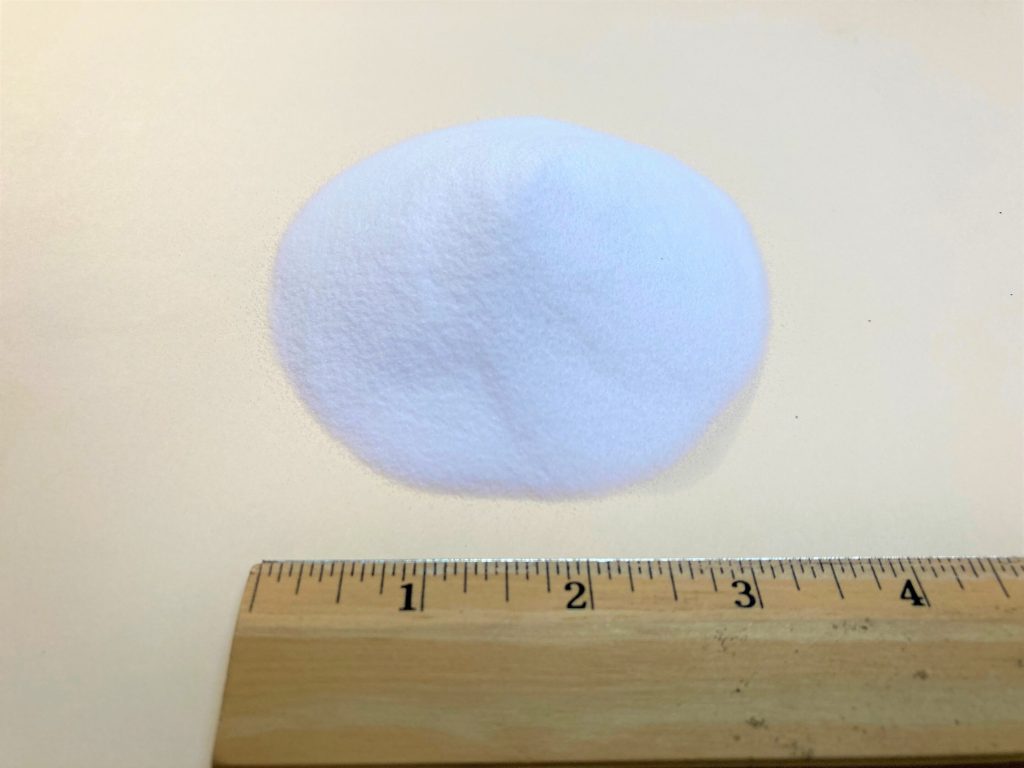
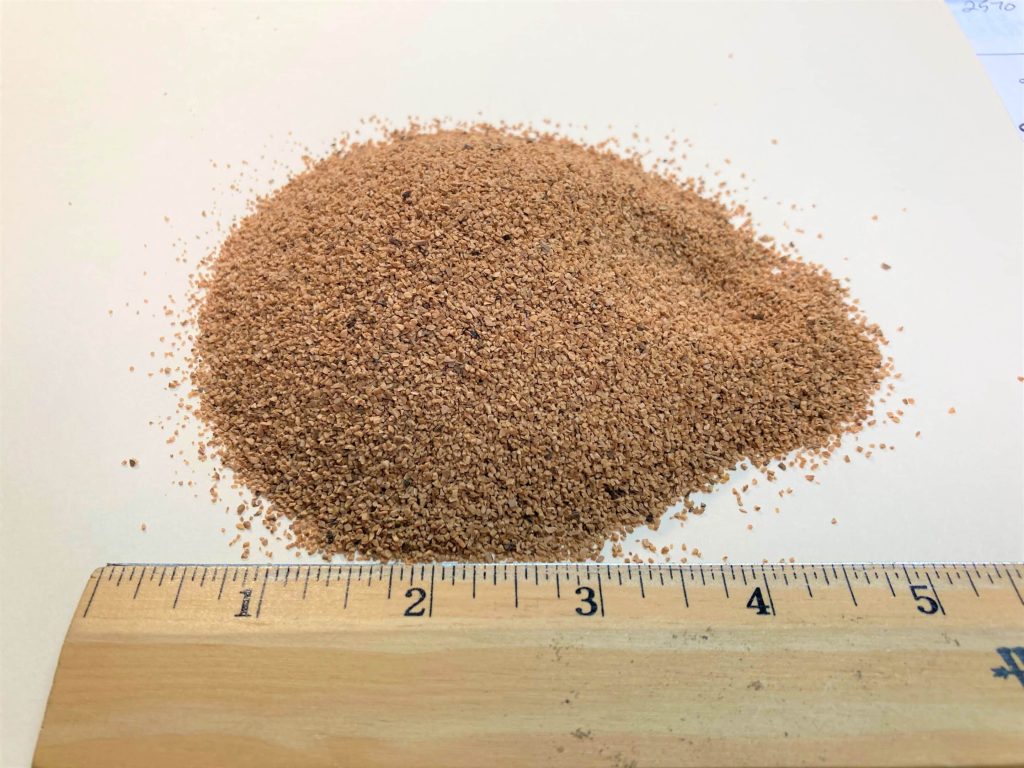
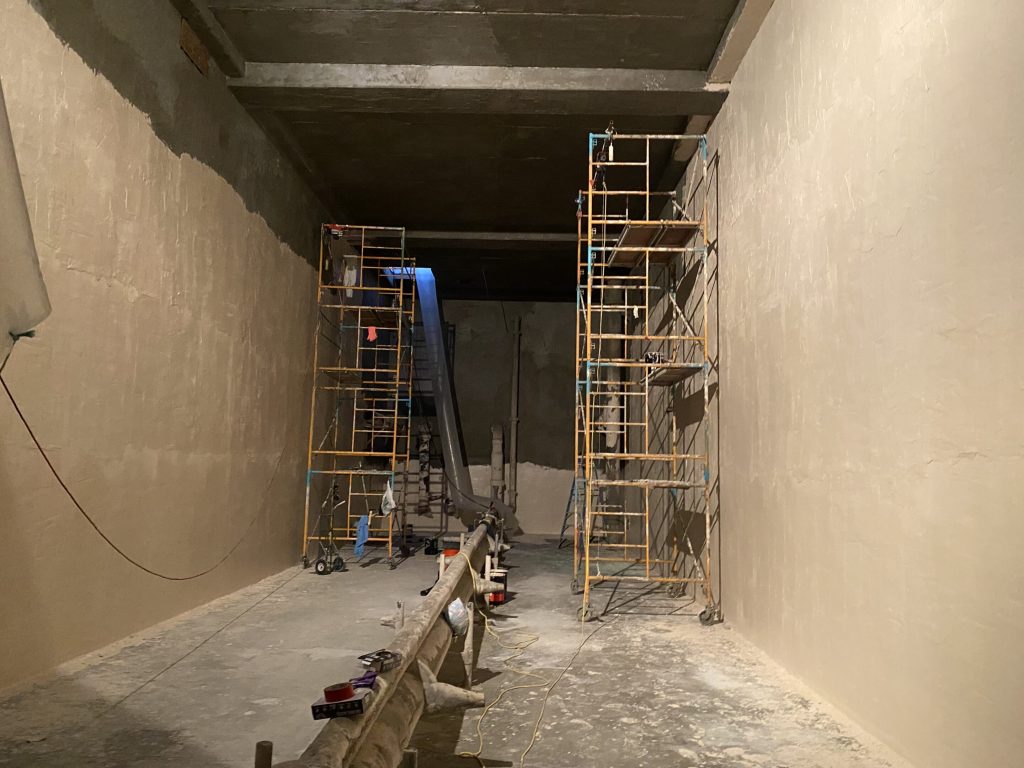
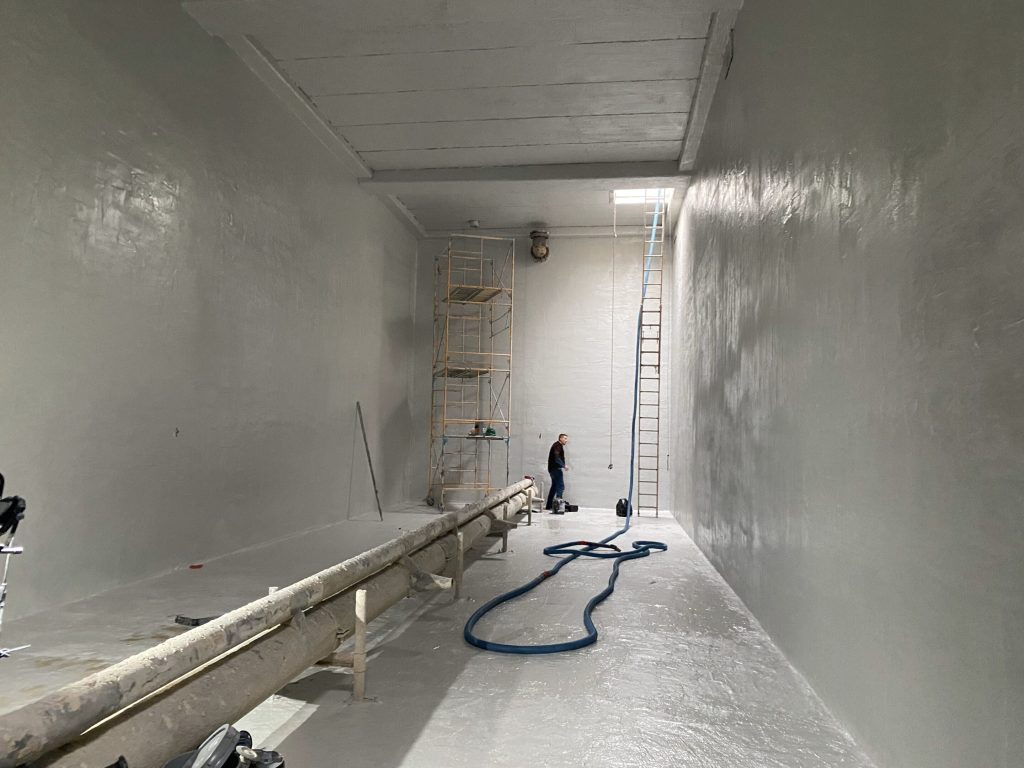
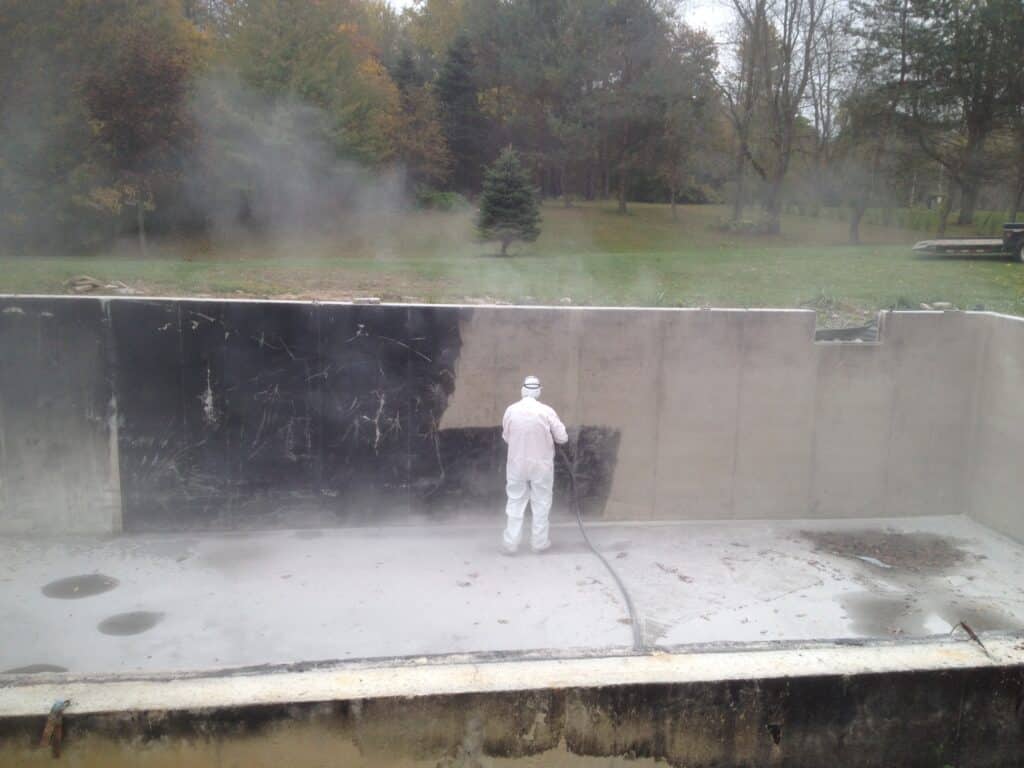
In many cases, such as simple smoke damage from a fire, surface cleaning is all that’s required for restoration. Many sealants can be applied directly onto the newly cleaned surface without regard to the actual surface profile. Fire restoration methods including pressure washing, soda blasting and hand cleaning leave the surface roughness in a like-new condition with little change, if any, to the surface profile (fig. 1).
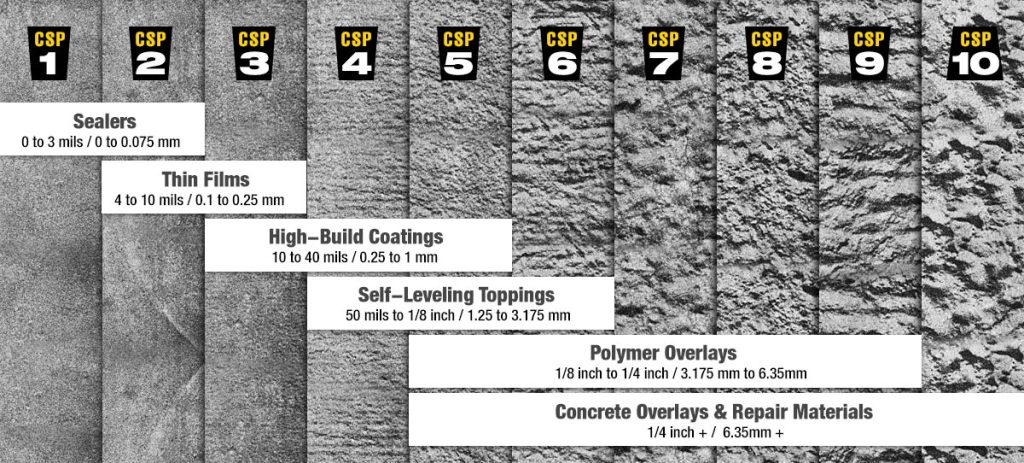
Many of the more advanced materials for concrete restoration (such as epoxies, polymers overlays, various mortars, and specialty coatings) require more vigorous profiling of the concrete to properly prepare the surface to accept the product. The “profile” of the surface refers directly to the roughness. This attribute is generally measured from the deepest “valley” on the surface to the highest “peak”. This roughness is expressed by a scale called the Concrete Surface Profile (CSP) as described and illustrated in ICRI 310.2R. This is a standardized measure of surface roughness that assigns a number – CSP 1 through CSP10 – for roughness as low as 0-3 mils to over ¼”. (fig.2)
Measuring this roughness can be done with numerous devices – some complicated and technical (such as lasers, pull-off adhesion tests), some more easily applied (such as replica tape and putty). One of the most common, and simple methods is the use of rubber comparator chips provided by ICRI. (fig. 3)) These rubber chips have a molded surface that replicates the surfaces of concrete of various profiles from CSP1 to CSP10. On restoration jobs the chips can be compared to the actual concrete surface to confirm that the required surface roughness has been achieved.