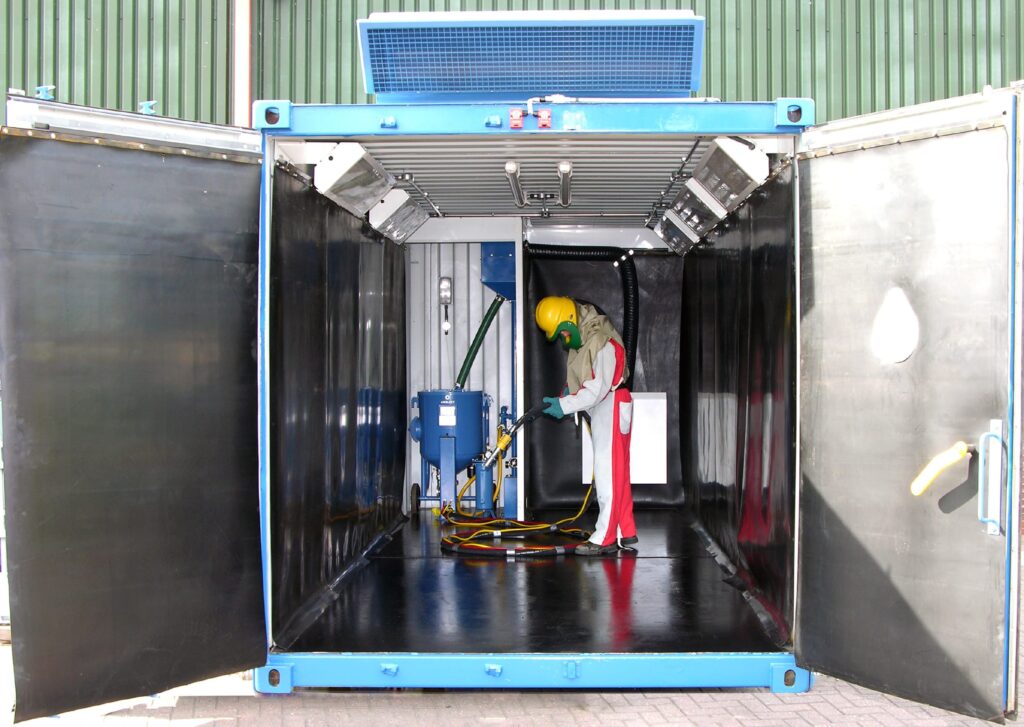
BLAST CABINETS
Blast Cabinets for Industrial Surface Preparation
From stock cabinets to fully engineered custom solutions, ESCA Blast helps you match the right blast cabinet system to your parts, process, media and production goals.
As an authorized distributor for Blast-It-All, Clemco and Empire, ESCA offers access to a wide range of abrasive blast cabinets, including suction cabinets, pressure cabinets, wet blast cabinets, tumble blast systems, lightweight media cabinets, modified cabinets, and custom-engineered solutions.
Whether you need a compact cabinet for occasional maintenance work or a production-ready system with turntables, automation or specialized part handling, our team can help match the right equipment to the job.
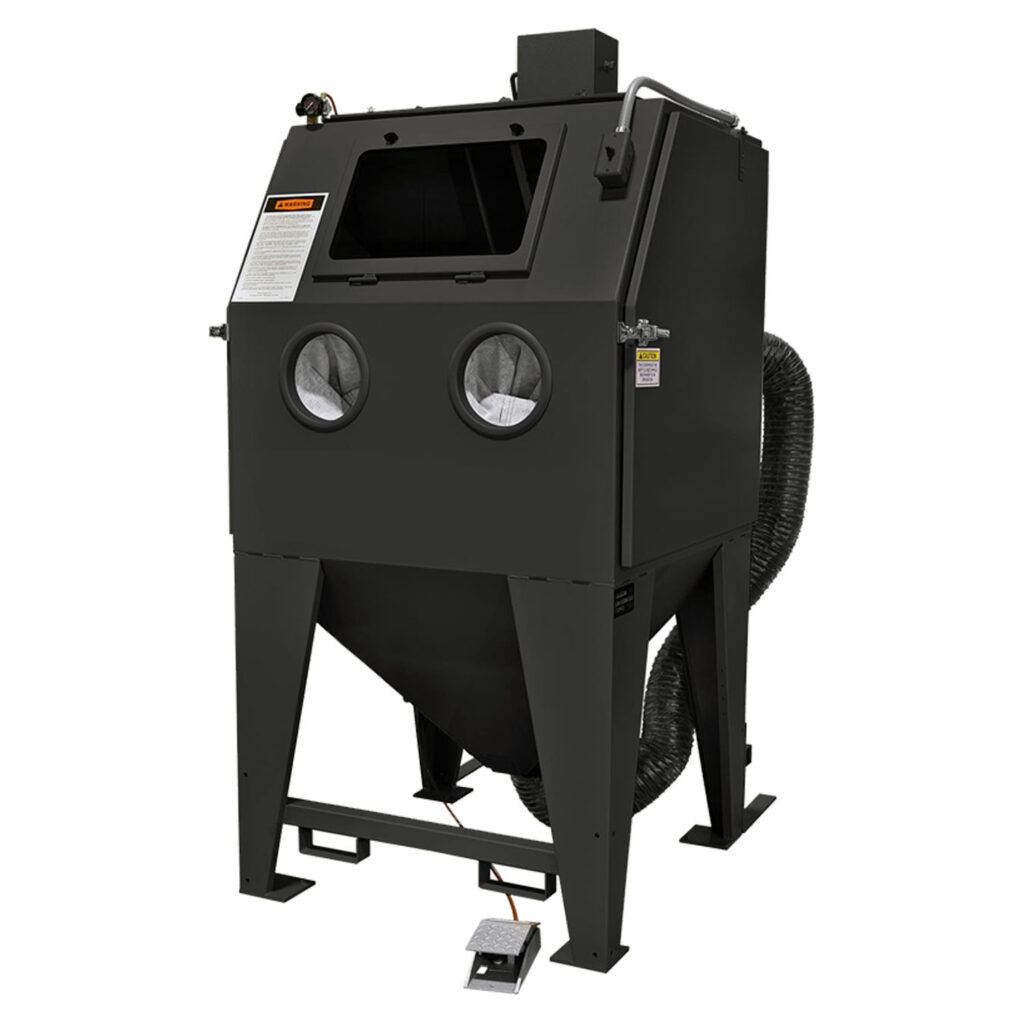
The Benefits of Using a Blast Cabinet
Controlled Environment
Keep abrasive media, dust & debris contained while giving operators a cleaner, more repeatable process.
Better Media Efficiency
Recover and reuse compatible media through reclaim systems, reducing waste and lowering operating costs.
Consistent Results
Support repeatable cleaning, finishing, deburring, coating removal or surface profiling on small to medium-sized parts.
Improved Workflow
Size, access doors, gloves, lighting, controls, turntables & ergonomic options can improve comfort and productivity.
Scalable Options
Start with a manual cabinet or step up to larger, more automated systems as production demands grow.
Choose the right cabinet style:
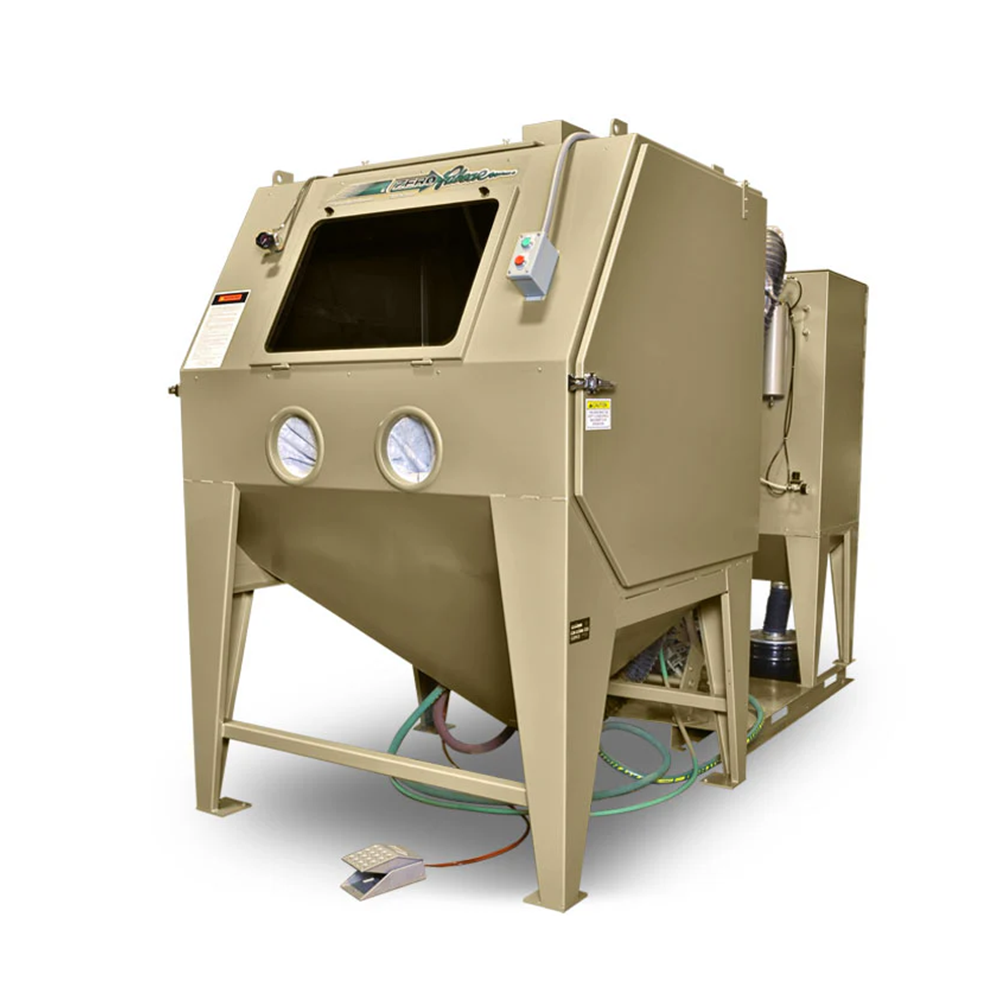
Suction Blast
Cabinets
Best for light to moderate cleaning, general maintenance, finishing and lower-volume blasting where budget, simplicity and air consumption matter. Suction cabinets are often a good fit for job shops, maintenance departments & general surface prep.
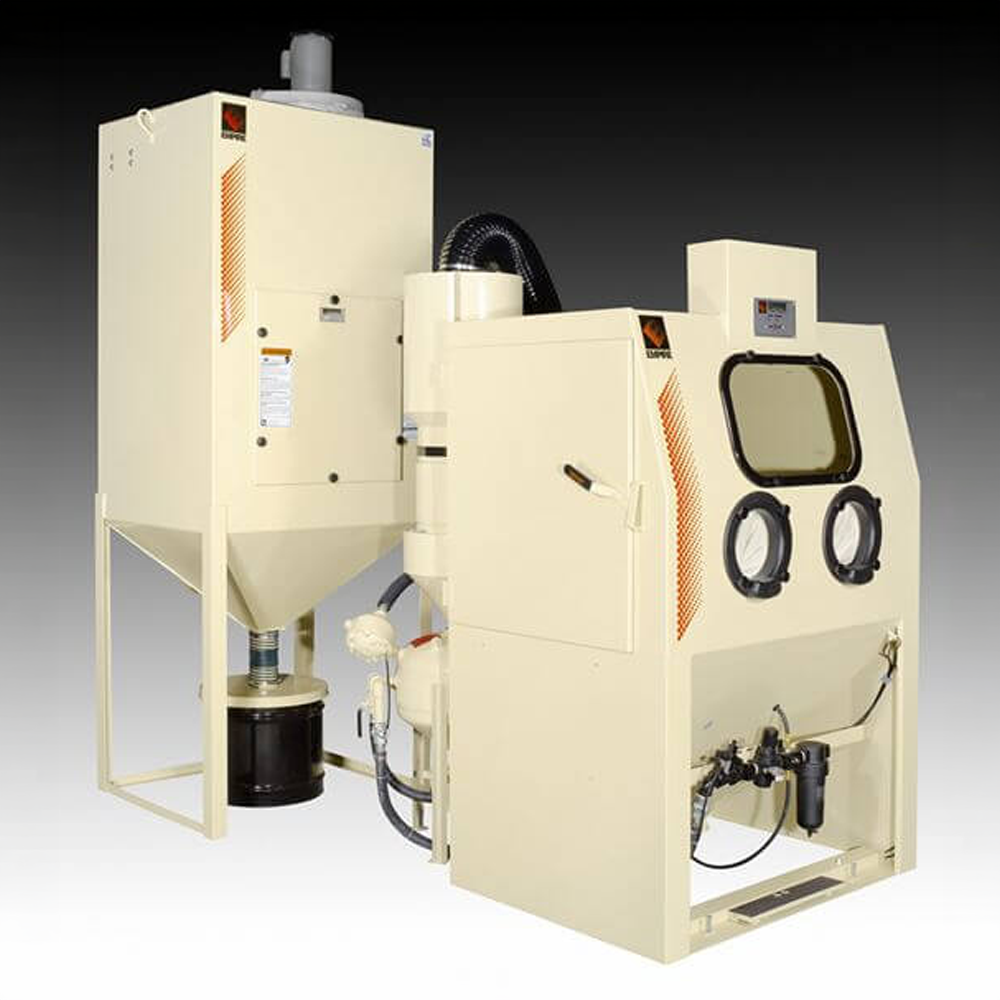
Pressure Blast
Cabinets
4 times faster than suction blasting, pressure blasting is ideal for heavier coatings, tougher surface prep and higher-production applications. Pressure systems are often better suited for demanding industrial work, including applications using heavier media.
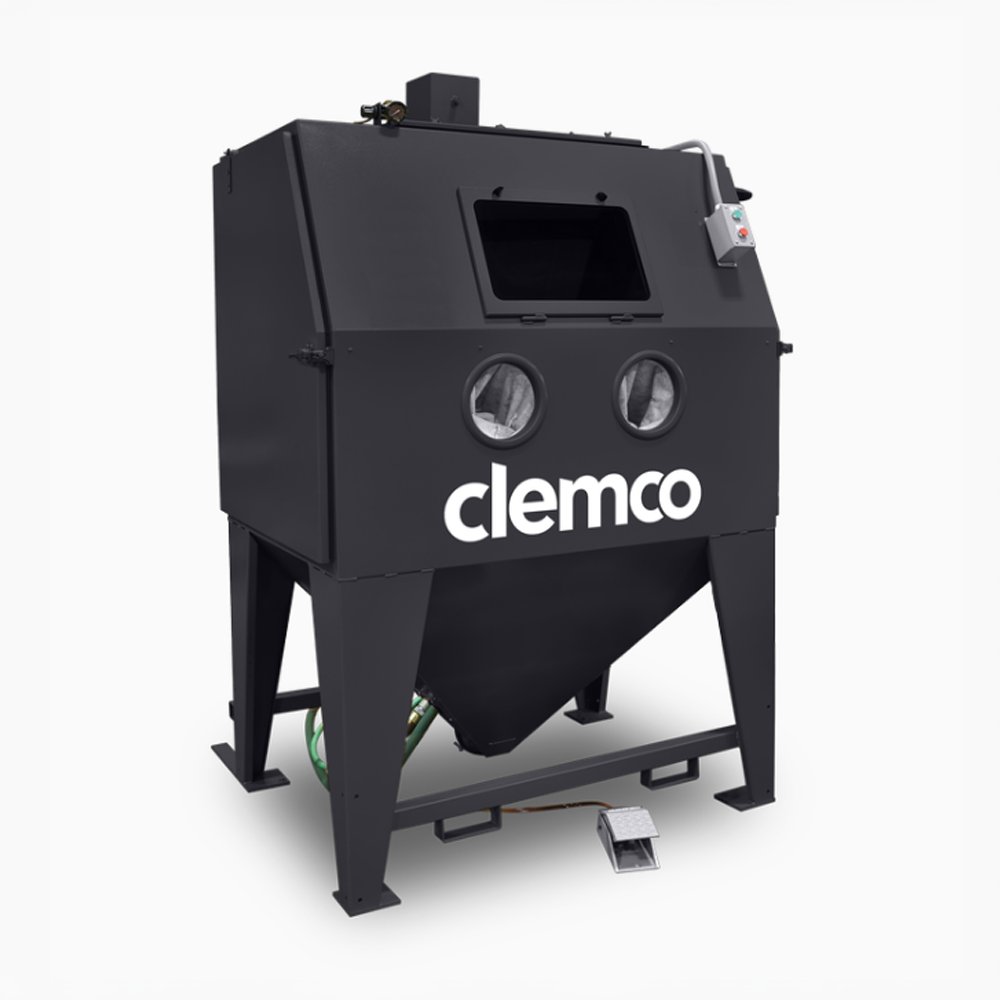
Wet Blast
Cabinets
Best for applications where dust reduction, reduced heat, smooth finishes or delicate parts are priorities. Wet cabinets can be useful for sensitive substrates, tight geometries and applications where dry blasting may be too aggressive.
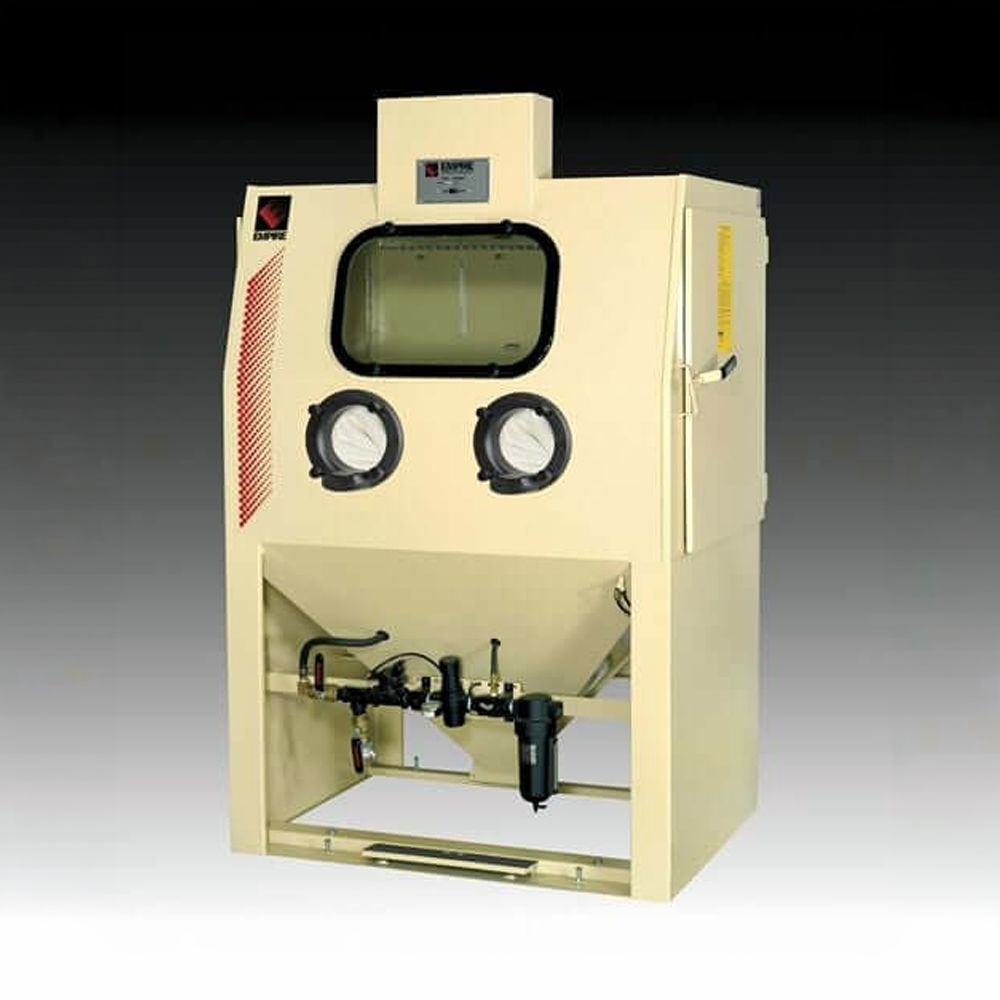
Lightweight Media
Cabinets
Best for plastic media, baking soda and other lighter abrasives used when the substrate must be protected. These lightweight abrasive cabinets feature plastic or bicarbonate media, chemical-free cleaning and gentle & repeatable surface prep.
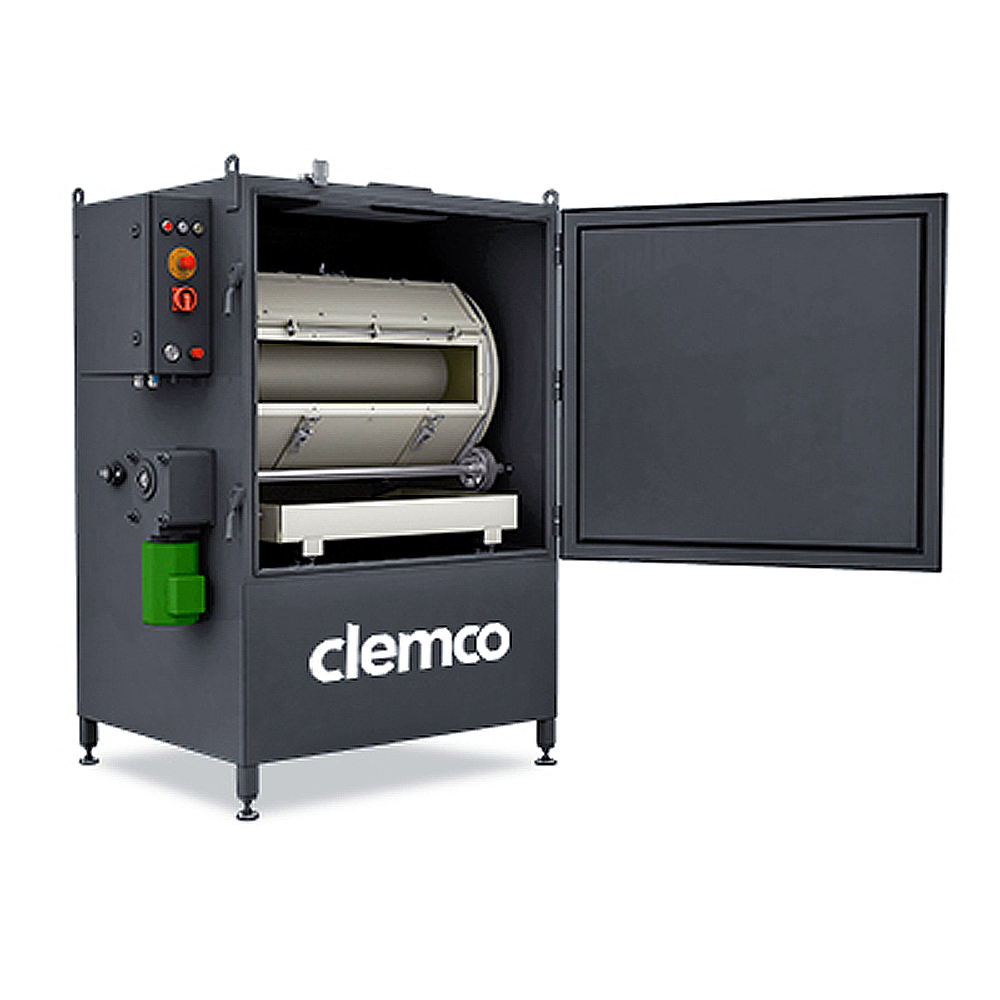
Tumble Blast
Cabinets
Best for batches of small parts that need consistent, hands-free processing. Tumble Blast Systems are the first step to automated, high-volume systems for uniform coverage and repeatable results across different part sizes and shapes.
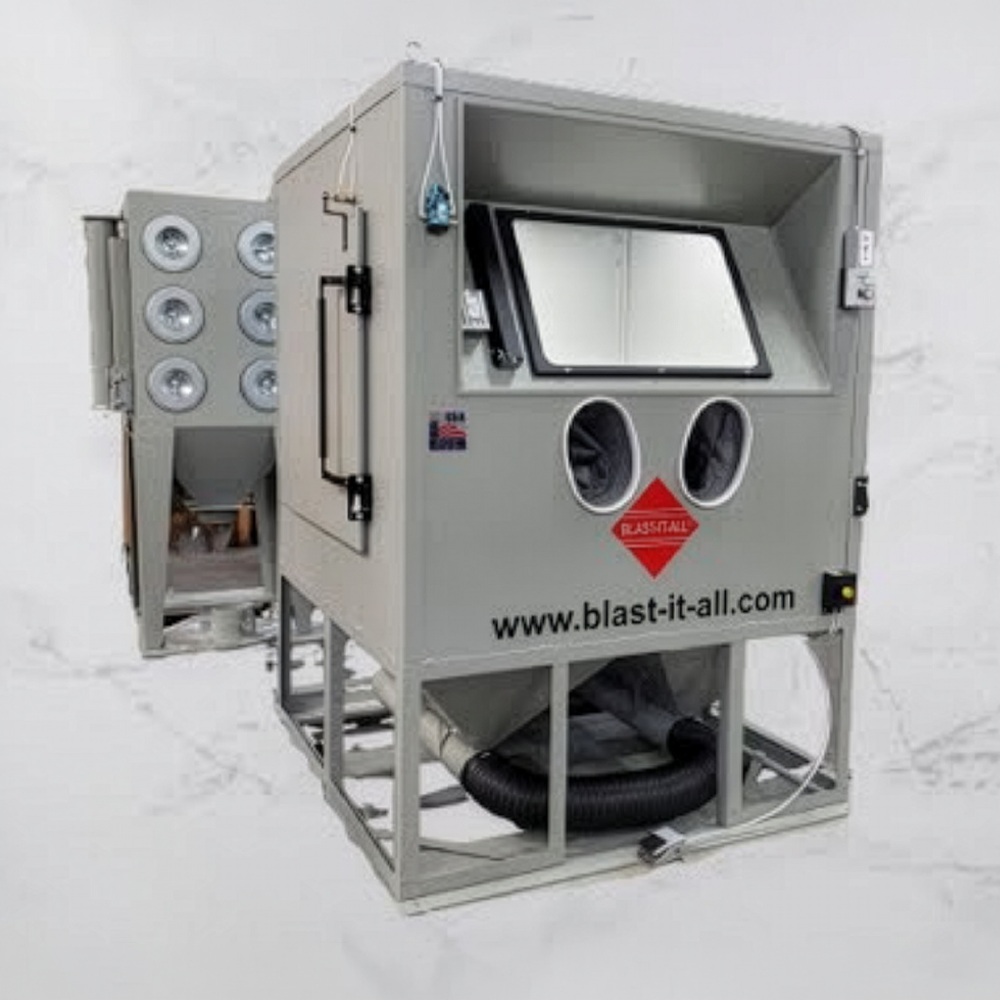
Modified & Custom
Cabinets
Best for unique parts, specialized loading, higher throughput, unusual dimensions, multiple operators, automation or integration into a production process. Examples include pass-through designs, powered turntables, work carts, roll blast systems and more.
STANDARD VS. MODIFIED VS. CUSTOM SOLUTIONS
Standard Blast Cabinets
For customers who need a proven cabinet platform with the right size, media delivery system, dust collection package and options.
Examples:
- General maintenance cabinets
- Bench or floor models
- Suction cabinets
- Pressure cabinets
- Light to medium production cabinets
- Cabinets with dust collector or media reclaimer packages
Modified Blast Cabinets
For customers who need a standard cabinet platform adapted to their parts or workflow.
Examples:
- Larger work envelopes
- Turntables
- Vertical doors
- Special electrical packages
- Additional blast guns
- Additional glove ports
- Timers
- Heavier wear protection
- Custom door configurations
- Higher-capacity dust collection
Custom Solutions
For customers with specialized production requirements, unusual parts, heavy workpieces or automation needs.
Examples:
- Pass-through cabinets
- Conveyorized systems
- Roll or pipe blasting systems
- Multi-operator cabinets
- Powered work carts
- Crane slots
- Automated gun movement
- Programmable controls
- Tumble or basket blasting systems
- Integrated reclaim and dust collection systems
Automated Precision at Scale
ESCA Blast partnered with one of the world’s largest recycled and refurbished golf ball companies to support a high-volume automated blasting application.
We proudly partnered with one of the world’s largest golf ball refurbishers to install this Empire continuous belt blasting system at one of their facilities—an efficient, automated solution for high-volume surface prep with minimal manual handling. The system was designed to process thousands of golf balls per day while reducing manual handling and improving production efficiency.
Explore what ESCA’s automation options can do for your workflow.
Trusted Brands We Represent

Blast-It-All Blast Cabinets
Durable, practical cabinet systems for shops that need reliable abrasive blasting, straightforward operation and a range of suction, pressure & configurations.
- Little-Blaster style cabinets
- Carolina Magnum style cabinets
- Suction and pressure options
- Shot peening configurations
- Good fit for shops that want rugged, proven cabinet equipment
Clemco Blast Cabinets
Industrial manual and engineered-to-order cabinet systems for demanding production, controlled blasting and specialized part handling.
- Dry abrasive manual cabinets
- Wet abrasive manual cabinets
- Lightweight abrasive cabinets
- Tumble cabinets
- Low-profile dust collectors
- Engineered-to-order solutions
Empire Blast Cabinets
High-production cabinet systems with strong options for pressure blasting, ergonomic operation, production finishing and modified cabinet configurations.
- Pro-Finish
- ProFormer
- Ergo-Blast
- Econo-Finish
- Modified Pro-Finish cabinets
- Automation options
Common Blast Cabinet Applications
- Rust, paint, scale and oxidation removal
- Surface preparation before coating, painting or powder coating
- Deburring machined parts
- Cleaning tools, molds, fixtures and production components
- Glass bead finishing and cosmetic surface finishing
- Batch processing small parts
- Firearm component preparation
- Automotive and restoration part cleaning
- Foundry and casting cleanup
- Maintenance department part cleaning
FREQUENTLY ASKED QUESTIONS
Find answers to common questions about the blast cabinets.
Don’t see your question? Contact us and we can add it!
What is the difference between a suction and pressure blast cabinet?
The main difference between a suction blast cabinet and a pressure blast cabinet is how the abrasive media is delivered to the blast nozzle.
A suction blast cabinet, also called a siphon blast cabinet, uses compressed air to create suction that pulls abrasive media from the cabinet hopper into the blast gun. The air and media mix at the gun, then exit through the nozzle. Suction cabinets are often a good choice for general cleaning, light surface preparation, lower-volume blasting, maintenance work and applications where a lower equipment cost and simpler setup are priorities.
A pressure blast cabinet uses a pressurized vessel to push abrasive media through the blast hose and nozzle. This creates a more aggressive blast stream with higher media velocity, making pressure cabinets better suited for heavier coatings, rust, scale, corrosion, production blasting and applications that require faster cleaning rates. Pressure cabinets are typically preferred when speed, cutting power and repeatable industrial performance are more important than initial equipment cost.
In general, suction cabinets are simpler and well suited for lighter-duty or general-purpose blasting, while pressure cabinets are better for more demanding industrial applications, faster production and tougher surface preparation requirements. ESCA can help determine which style is best based on your part size, material, media type, surface condition, required finish and available compressed air.
When should I choose a wet blast cabinet?
A wet blast cabinet is a good choice when dust reduction, surface finish, heat control or substrate protection are important. Unlike dry blasting, wet blasting mixes abrasive media with water to create a slurry. This helps suppress airborne dust, reduce frictional heat and produce a smoother, more controlled finish on many parts.
Wet blast cabinets are often used for delicate parts, precision components, aluminum, stainless steel, machined parts, castings, molds, tooling and applications where dry blasting may be too aggressive. They can also be useful when a customer wants to clean or finish a surface without embedding abrasive particles as deeply into the material.
Choose a wet blast cabinet when the goal is not just to remove material quickly, but to achieve a cleaner, smoother or more refined surface finish. Wet blasting may be the better option for cosmetic finishing, light deburring, cleaning sensitive components, reducing dust in the work area or minimizing heat buildup on the part.
A dry blast cabinet may still be the better choice for aggressive coating removal, heavy rust removal, surface profiling or applications where the part must remain completely dry. ESCA can help compare wet and dry cabinet options based on the material being blasted, the desired finish, the media being used and the overall production process.
Can blast cabinets be customized?
Yes. Blast cabinets can often be customized or modified to better match the part, process, operator workflow and production requirements. While many customers can use a standard blast cabinet, others need a modified or fully engineered solution because of part size, part weight, production volume, loading method, finish requirements or automation needs.
Common blast cabinet customizations may include larger work chambers, pass-through cabinet designs, vertical doors, turntables, work carts, additional glove ports, multiple blast guns, upgraded lighting, heavier wear protection, special electrical packages, larger reclaim systems, improved dust collection, tumble baskets, powered part handling, conveyor systems or automated gun movement.
Custom blast cabinets are especially useful for oversized parts, heavy workpieces, long parts, repetitive production work, batch processing, high-volume cleaning and applications where manual blasting would be too slow or inconsistent. A custom cabinet may also help improve ergonomics by making it easier for the operator to load, rotate, position or access the part during blasting.
ESCA works with leading blast cabinet manufacturers to help customers source standard cabinets, modified cabinets and fully engineered custom blast cabinet systems. From stock cabinets to fully engineered custom solutions, the goal is to match the equipment to the way the customer actually works.
What blast media can be used in a blast cabinet?
Many types of abrasive blast media can be used in a blast cabinet, depending on the cabinet design, media delivery system, reclaim setup, dust collection system and the material being blasted. Common cabinet media include aluminum oxide, glass bead, ceramic bead, plastic media, baking soda, crushed glass, steel shot, steel grit, stainless steel media, silicon carbide, walnut shell and corn cob.
The best blast media depends on the application. Aluminum oxide is commonly used for aggressive cleaning, etching and surface preparation. Glass bead is often used for cleaning, peening and producing a smoother cosmetic finish. Plastic media can be useful for coating removal where the substrate must be protected. Baking soda is a softer option for delicate cleaning or applications where reduced surface damage is important. Steel shot and steel grit are often used for heavier-duty cleaning, scale removal, peening or applications where metallic media is appropriate.
Not every cabinet is designed for every type of media. Some lightweight media may require specific cabinet configurations, while heavier or more aggressive abrasives may require upgraded wear protection, proper reclaim equipment and the right dust collection setup. Media shape, hardness, friability, mesh size and reusability all affect cabinet performance.
ESCA can help match the right blast media to the cabinet, part material, required finish, surface profile, production rate and reclaim requirements. Choosing the right media is just as important as choosing the right cabinet.
Do blast cabinets need dust collection?
Yes. Most dry blast cabinets require dust collection to maintain visibility inside the cabinet, remove airborne dust, protect the operator environment and keep the system operating efficiently. During blasting, abrasive media impacts the part and breaks down coatings, rust, scale or surface contamination. That process creates dust and debris that must be pulled away from the cabinet work area.
A properly sized dust collector helps keep the cabinet under negative pressure, improves visibility through the viewing window, reduces dust leakage and supports cleaner operation. Dust collection also helps separate dust and broken-down media from reusable abrasive when the cabinet includes a reclaim system.
The right dust collection setup depends on the cabinet size, media type, application, production volume and amount of dust being generated. A light-duty cabinet used occasionally may require a different dust collector than a production pressure cabinet running aggressive media for hours at a time.
Wet blast cabinets handle dust differently because the abrasive is mixed with water, which helps suppress airborne dust during the blasting process. However, wet systems still require proper slurry management, filtration, maintenance and disposal procedures depending on the application and material being removed.
ESCA can help evaluate cabinet dust collection needs based on the media, substrate, coating, production rate and shop environment.
When should I choose a blast room instead of a blast cabinet?
A blast cabinet is usually the right choice for small to medium-sized parts that can fit inside an enclosed work chamber and be handled by an operator through glove ports, turntables, baskets or other cabinet accessories. Cabinets are ideal for contained blasting, media recovery, repeatable part cleaning, controlled finishing and smaller production work.
A blast room is the better choice when the parts are too large, too heavy or too awkward to fit inside a cabinet. Blast rooms are commonly used for large fabrications, structural steel, heavy equipment, trailers, frames, large castings, industrial components and parts that require the operator to enter the blasting enclosure.
The decision often comes down to part size, part weight, handling requirements and production flow. If the operator can comfortably load and manipulate the part inside a cabinet, a blast cabinet is usually more compact and efficient. If the part requires forklifts, cranes, carts, rolling stands or full operator access around the workpiece, a blast room may be the better solution.
Customers should also consider production volume, media recovery, dust collection, available floor space, material handling, operator safety and future growth. In some facilities, the right answer may be both: blast cabinets for smaller parts and touch-up work, with a blast room for larger components.
ESCA can help determine whether your application is best suited for a blast cabinet, modified cabinet, automated cabinet system or full blast room.
Looking for Larger-Scale Containment?
When your parts or production needs go beyond the size limits of a cabinet, a fully enclosed blast room may be the solution. Blast rooms provide the same controlled, contained environment for surface preparation, just on a much larger scale. Ideal for oversized parts, frequent blasting, or operations where walk-in access is essential.
Learn more by clicking the button below.